

Discover Yulia Shibari's approach to Living Art, where rope, body, movement, music, light and human connection become a live artistic experience.
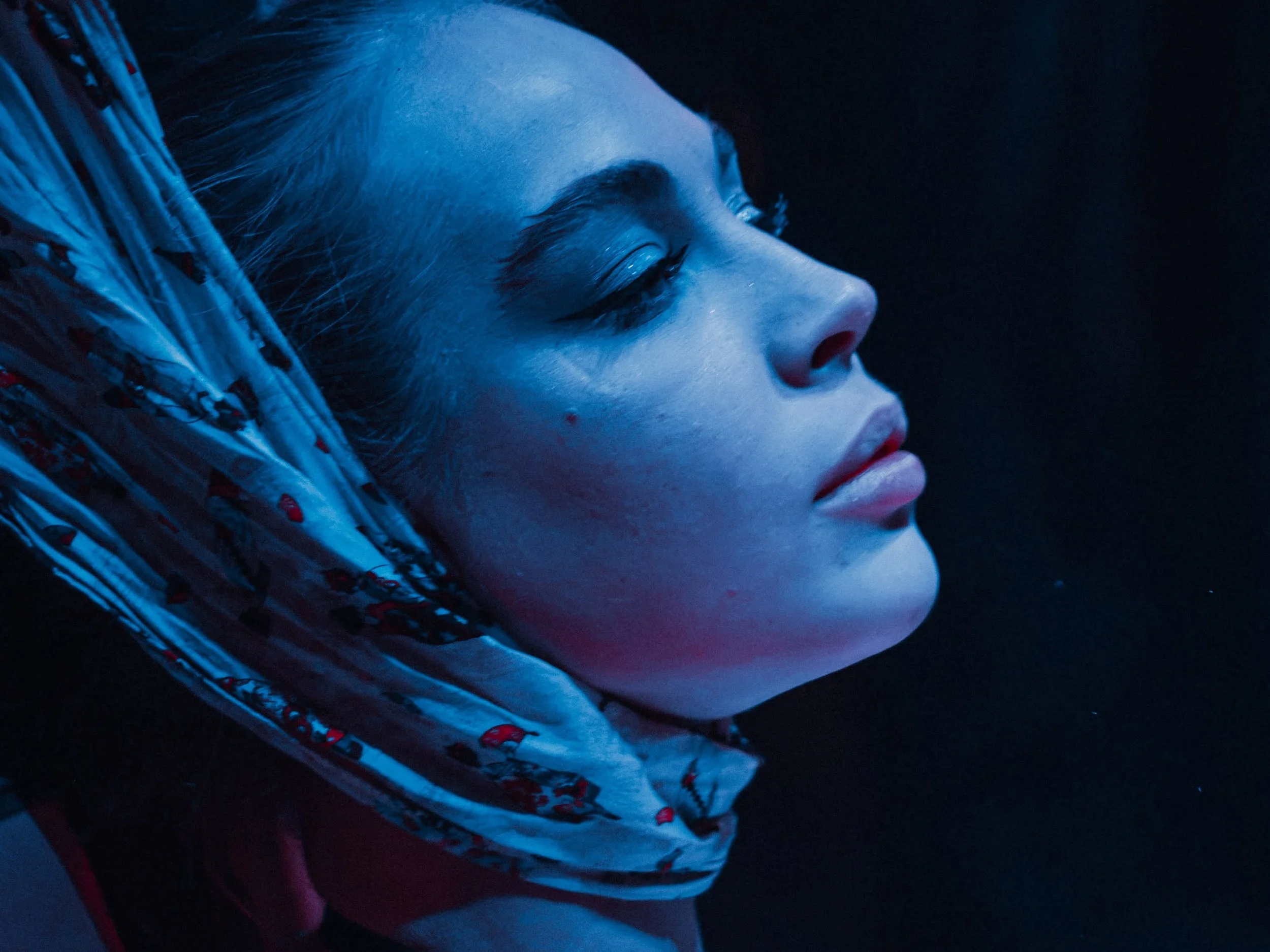
Shibari as Living Art
What Is Living Art?
For me, Living Art happens when Shibari becomes a living composition. There is no single fixed result. The artwork emerges from the interaction between my body and presence as the artist, the model's body and energy, the rope and the lines it creates, movement, music, light, space and the audience.
Sometimes I prepare a performance very carefully, especially with a new model or a technically demanding structure. I need to understand the body, its capacity and what is possible before going on stage. Other times I have no fixed plan and work almost entirely on intuition. In both cases, I respond to what is actually happening in the moment.
The Model as Part of the Artwork
The model is not simply someone I tie. The connection between us matters enormously, and I prefer to work with people I feel an energetic connection with, because that is what allows a performance to come alive.
The body itself becomes part of the artistic material. Rope, harnesses and different structures change the visual geometry of the body and create entirely different forms. For me, it is similar to Ikebana: creating a beautiful composition from living elements. I am fascinated by the beauty of the body and by how different bodies become different works of art.
Shibari, Form & Engineering
There is a strong technical and intellectual side to my work. I think about lines, tension, structure, balance, and the distribution of weight and pressure. In suspension especially, I am solving an engineering problem while creating a visual composition.
But technical precision never exists apart from the person. I stay in constant communication with the model and pay close attention to how they are feeling. Safety and artistic freedom are connected: when I know the structure is controlled and the person is safe, I have far more freedom to create.
Movement and Dance
I don't want the finished form to remain static. I love movement, dancing and playing with the model. Sometimes the movement is spontaneous, and sometimes it answers the music. I want to develop this side of my work further, combining Shibari, movement and dance so that the rope structure becomes something alive.
The Role of Light and Music
I am very visual, so lighting is essential. It has to let me see the body and rope clearly, because the placement and tension of every line matters, while also creating the atmosphere of the performance.
Music is just as important. I am very sensitive to it and often let it guide my movement and energy. A different soundtrack can completely change how I interact with the model and how the performance unfolds.
The Energy of the Audience
I don't try to tell the audience what to feel. I prefer to create something strong enough that they experience it for themselves. Sometimes I see curiosity, sometimes surprise, sometimes uncertainty about what they are witnessing. And sometimes the room goes completely silent, with everyone intensely focused.
The audience's attention becomes part of the performance. I feel their energy, and it gives me more focus, curiosity and inspiration. It is a kind of exchange:
artist → model → artwork → audience → artist
Extreme and Safe
Something can look extreme while being completely controlled. The audience may see something intense or unexpected, and at the same time sense that I am fully in command of the situation. That sense of control creates trust.
I believe this is part of the magic. People can become completely absorbed in what they are watching because they feel the person creating it knows exactly what they are doing.
The Beauty of the Process
Most importantly, I want people to remember the process, not only the final shape. I want them to see how the lines appear, how the body changes, how the rope transforms the figure, how movement and music shape the composition, and how something is created before their eyes that did not exist a moment before.
This is the beauty of Kinbaku and Shibari as Living Art: a living, active moment. The audience watches the artwork being created, and their attention becomes part of the energy that creates it.